

题目:The Art and Science of Molecular Beam Epitaxy —From Quantum Anomalous Hall Effect to Interfacial Superconductivity
报告人:Cui-Zu Chang
邀请人:付海龙
时间:2024年6月14日(周五)10:00-11:30
地点:紫金港校区海纳苑8幢215报告厅
摘要:
In this talk, I will briefly introduce the molecular beam epitaxy (MBE) growth mechanism and then focus on my research, which centers on the MBE growth of quantum materials, spanning from topological materials to interfacial superconductors. I will talk about two solid-state phenomena with zero resistance: the quantum anomalous Hall (QAH) effect and the interface superconductivity. The QAH insulator is a material in which the interior is insulating but electrons can travel with zero resistance along one-dimensional conducting edge channels. Owing to its resistance-free edge channels, the QAH insulator is an outstanding platform for energy-efficient electronics and spintronics as well as topological quantum computations. With many efforts, we were the first to realize the QAH effect in MBE-grown Cr- and V-doped topological insulator (TI) thin films. I will briefly talk about the route to the QAH effect and then focus on our recent progress on the high Chern number QAH effect and three-dimensional QAH effect in MBE-grown magnetic TI multilayers. Finally, I will talk about the interfacial superconductivity in MBE-grown magnetic TI/iron chalcogenide heterostructures. Moreover, the magnetic TI/iron chalcogenide heterostructures fulfill the three essential ingredients of chiral topological superconductivity, i.e. ferromagnetic, topological, and superconducting orders, and thus provide an alternative platform for the exploration of chiral Majorana physics towards the scale topological quantum computations.
个人简介:
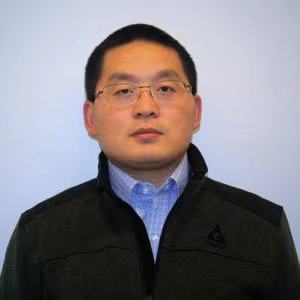
Dr. Cui-Zu Chang is a professor in the Department of Physics at The Pennsylvania State University. Chang received his bachelor’s degree from Shandong University in 2007 and his Ph.D. from Tsinghua University in 2013. After postdoc research at MIT, Dr. Chang joined Penn State in 2017 as an assistant professor. He was promoted to associate professor in 2022 and to full professor in 2024. From 2022 to 2024, he held the Henry W. Knerr Chair. Dr. Chang’s research primarily focuses on topological insulators (TIs), quantum anomalous Hall (QAH) insulators, and their integration with superconductors. His awards include NSF CAREER Award (2019), ARO-Young Investigator Program Award (2018), Alfred P. Sloan Research Fellowship (2018), IUPAP Young Scientist Prize (2016), Macronix Prize (2019), Gordon and Betty Moore EPiQS Materials Synthesis Investigator Award (2019), Henry W. Knerr Early Career Chair Professor (2021), and Rustum and Della Roy Innovation in Materials Research Award (2021).