
Title: Superfluid Density and Energy Scales of Unconventional Superconductors
Speaker: Prof. Yasutomo J. Uemura
Time: 15:30, June 26 (Friday)
Location: Room 215, No. 8 Hainayuan Building
Abstract:
Discovery of high-Tc cuprate superconductors (HTSC), followed by the synthesis of A3C60, iron-pnictides/chalcogenides and other exotic superconducting systems, introduced unconventional superconductors (UCSC) having their mechanisms of condensation and/or pairing distinctly different from those of simpler metals which can be explained by the BCS theory. In this talk I will show our muon spin relaxation (MuSR) measurements, and discuss how one can demonstrate the new mechanisms of UCSC by examining correlations among key energy-scale parameters, including the transition temperature Tc, superfluid density ns/m*, effective Fermi energy εF, excitation energy of the magnetic resonance mode, onset temperatures of Nernst effect and light-induced transient superconductivity, and the spin fluctuation energy scale ℏωsf. As to the condensation mechanisms, we will resort to analogy / comparisons with superfluid 4He as a representative system undergoing Bose Einstein Condensation (BEC), and further discuss modifications of a simple BEC-BCS crossover picture to include additional effects of competing order. We will draw attention to development of “local phase coherence” among preformed bosonic pairs in the underdoped HTSC systems, at temperatures well above Tc but well below the pair formation temperature T*. We will also show signatures of coexisting unpaired fermions and condensed boson in the ground state of the overdoped / pressurized side of the cuprates, A3C60, Ba122 and other UCSC, which suggests that the “BCS side” of the crossover behaves very differently from the simple BCS expectations. We will compare two different pictures, microscopic phase separation (such as the Swiss Cheese Model) versus dirty-limit BCS theory to account for the situation in the overdoped / pressurized side of UCSC. In consideration of a paring mechanism in HTSC, we will propose possible resonance of spin (ℏωsf) and charge (εF) energy scales, and extend that concept for explaining the unusual behaviors in the overdoped cuprates.
Bio:
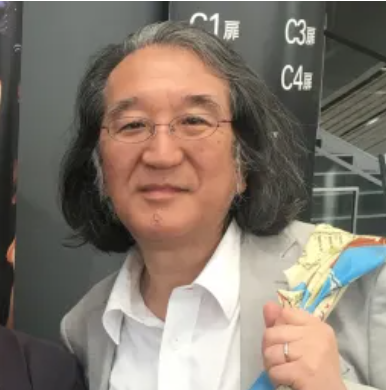
Professor Yasutomo J. Uemura received his B.Sc., M.Sc. and D.Sc. (1982) from the University of Tokyo, and joined the Department of Physics at Columbia University in 1988. His research focuses on superconductivity and magnetism, primarily employing muon spin relaxation (MuSR) and neutron scattering techniques. He is best known for establishing the Uemura plot, which demonstrates a nearly linear scaling between the superconducting transition temperature Tc and superfluid density in cuprates and other unconventional superconductors. He and his postdoctoral researchers recently designed a series of novel magnetic semiconductors and reexamined the underlying ferromagnetic mechanisms using MuSR. Their work has revealed a linear proportionality between the MuSR static local field parameter and the Curie temperature Tc in p-type magnetic semiconductors including the prototypical III-V compound (Ga,Mn)As.