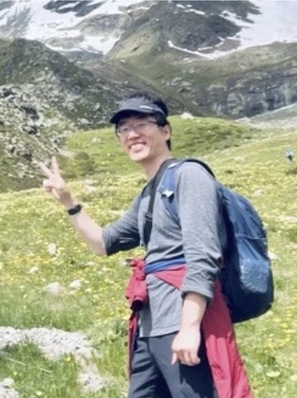

王炜辰 (University of Milano-Bicocca)
2026年1月8日, 周四14:00-15:15
紫金港西区海纳苑8幢324
Abstract:
The majority of galaxies in the Universe are known to form and evolve in the filamentary large-scale structures named the Cosmic Web. In the early epochs, the Cosmic Web also hosts a plethora of gas flows and massive black holes, especially around the web nodes. Yet it remains a mystery how environments as such have shaped the very early phase of galaxy formation.
To address this question, I would like to present a study of galaxies in a gas-rich z~3 Cosmic Web node. Deep JWST and ALMA observations of this overdense field revealed rotating disks with effective radii up to 10 kpc, rarely seen in normal co-evolution fields. Also discovered is a massive galaxy located at the center of a CGM gas reservoir, but has reached quiescence surprisingly. I will show that the cosmic gas accretion and radio-mode AGN feedback may have played critical roles in the diverse formation pathways of these objects. I will end by discussing the encouraging prospects of utilizing next-gen wide-field facilities (Euclid, CSST, SKA) to better the understanding of early-epoch galaxy formation in the future.
Biography: Weichen Wang is currently a postdoc researcher at the University of Milano-Bicocca, Italy. He obtained his PhD in 2022 from the Johns Hopkins University and bachelor degree in 2016 from Tsinghua University. His research focuses on the circumgalactic medium and the early-phase galaxy formation in extreme environments, using a broad range of facilities including the JWST, VLT/MUSE, ALMA, and HST.